blob:https://booksinformation.site/5437f647-a3b5-4546-9f1b-5bf386bb74ed
Finding the best fiction books for beginners: top picks to start reading can make starting a reading habit much easier.Starting a new reading habit can feel surprisingly daunting Opening a fresh novel only to wonder after a few pages if you picked the wrong title is a common hurdle. With thousands of options filling the shelves, choosing your entry point isn’t always straightforward.
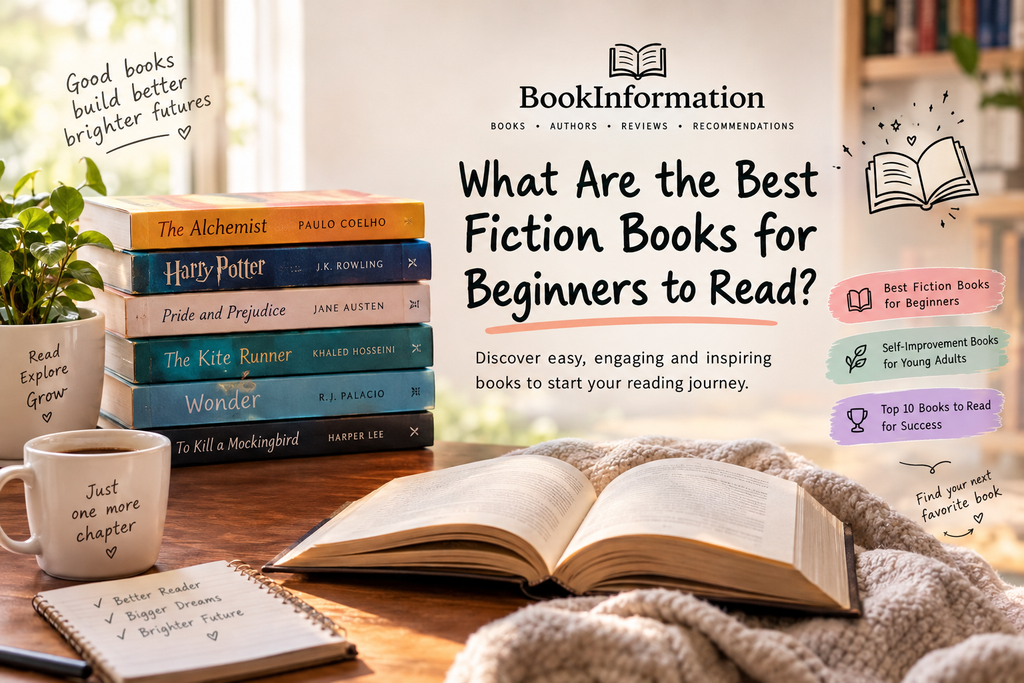
So, what are the ” best fiction books for beginners” to read? The ideal choice ultimately comes down to your personal interests, comfort level, and the types of stories that hold your attention. Some novels offer light, fast-paced entertainment, while others dive into deeper themes without overwhelming you with complex prose.
At BooksInformation, we take the guesswork out of discovering your next great read. We provide accessible book blogs, author highlights, honest reviews, concise summaries, and curated recommendations tailored for every stage of your reading journey.
Best fiction books for beginners
Your initial choices shape how you view reading as a whole. Diving straight into a dense or overly complicated classic can quickly drain your enthusiasm. On the flip side, a captivating narrative with rich, memorable characters makes turning the pages effortless.
A great beginner-friendly novel usually hits a few key benchmarks:
- Clear, easy-to-follow plotlines
- Relatable or compelling characters
- Straightforward, accessible language
- A manageable page count
- Thought-provoking themes that stay with you
- Enough momentum to keep you coming back
The ultimate goal isn’t just checking titles off a list—it is finding the specific genres and voices that make reading a genuinely rewarding pastime.
Top Fiction Recommendations for New Readers and “best fiction books for beginners”
Here are ten widely loved novelsand books that serve as perfect gateways into fiction.
1. The Alchemist by Paulo Coelho
This uplifting fable follows Santiago, a young Andalusian shepherd who embarks on a journey across the desert in search of a hidden treasure. Along the way, he encounters mentors who challenge him to listen to his heart and follow his dreams.
Why it works: It is brief, highly readable, and filled with timeless wisdom about personal growth and purpose.
2. Harry Potter and the Philosopher’s Stone by J.K. Rowling
For fans of fantasy and adventure, this iconic novel provides an ideal starting point. It tells the story of an orphaned boy who discovers his magical heritage and begins his first year at Hogwarts School of Witchcraft and Wizardry.
Why it works: The vibrant world-building, clever humor, and strong focus on friendship make reading feel effortless.
3. The Little Prince by Antoine de Saint-Exupéry
Though it presents itself as a simple tale, this short book delivers profound insights on love, loneliness, and human nature through the eyes of a young prince traveling between planets.
Why it works: It is extremely concise yet packed with emotional depth, making it accessible to readers of all skill levels.
4. Pride and Prejudice by Jane Austen
Set in 19th-century England, this classic follows the sharp-witted Elizabeth Bennet as she navigates social expectations, family dynamics, and her changing impressions of the mysterious Mr. Darcy.
Why it works: While the historical prose requires a bit more focus, it serves as an excellent, highly engaging introduction to classic literature.
5. The Kite Runner by Khaled Hosseini
This powerful narrative explores the intense friendship between two boys growing up in Kabul and the haunting journey toward redemption that follows years later.
Why it works: The plot moves quickly and packs a strong emotional punch, offering a seamless entry point into contemporary literary fiction.
6. Wonder by R.J. Palacio
This heartwarming story centers on August Pullman, a boy with facial differences who enters a mainstream middle school for the first time.
Why it works: Told from multiple viewpoints using direct, uncomplicated language, it offers a moving look at empathy, kindness, and acceptance.
7. Animal Farm by George Orwell
This clever allegory uses a group of farm animals overthrowing their human owner to explore political corruption, power dynamics, and societal control.
Why it works: It delivers sharp political commentary in a remarkably short, straightforward narrative that is easy to digest.
8. The Book Thief by Markus Zusak
Narrated by Death and set in Nazi Germany, this novel focuses on Liesel, a young foster girl who finds comfort and courage by stealing and sharing books during WWII.
Why it works: It combines historical settings with a unique narrative voice, highlighting the profound impact of storytelling during difficult times.
9. To Kill a Mockingbird by Harper Lee
Told through the eyes of young Scout Finch in the American South, this classic addresses serious themes of justice, prejudice, and morality as her father defends an innocent Black man in court.
Why it works: The child’s perspective keeps the narrative grounded, personal, and easy to connect with despite the heavy subject matter.
10. The Fault in Our Stars by John Green
This modern young adult novel follows Hazel and Augustus, two teenagers who meet in a cancer support group and form a deep bond based on wit, honesty, and shared experiences.
Why it works: Written in a fresh, conversational tone, it delivers a relatable mix of humor and heart.
Expanding Into Personal Growth Books
Fiction isn’t your only option for building a steady reading habit. If you want practical insights alongside entertainment, exploring self-improvement titles tailored for younger readers is a great alternative.
Focusing on personal development can help you build skills in key areas:
- Establishing positive daily habits
- Building authentic self-confidence
- Managing time and priorities effectively
- Navigating complex emotions
- Setting and reaching meaningful goals
- Developing resilience when facing setbacks
You don’t need to tackle an entire shelf of self-help guides at once. Simply pick one topic that aligns with your current life goals and take away what works for you. Reading should feel like a tool for growth, not a chore.
Exploring Books on Success
If you’re searching for top-recommended titles on achieving success, keep in mind that success looks different for everyone. Readers focused on personal and professional growth often turn to books that emphasize discipline, strategic thinking, and emotional intelligence.
Frequently recommended titles include:
- Atomic Habits by James Clear
- The 7 Habits of Highly Effective People by Stephen R. Covey
- Think and Grow Rich by Napoleon Hill
- How to Win Friends and Influence People by Dale Carnegie
- The Psychology of Money by Morgan Housel
- Mindset by Carol S. Dweck
- Deep Work by Cal Newport
- Man’s Search for Meaning by Viktor E. Frankl
Reading these guides provides valuable perspectives, but real results come from taking those principles and applying them to your daily life.
Practical Steps to Choose Your First Book
If you’re still deciding where to start, these straightforward steps can help narrow down your options:
- Pick a Genre: Think about the types of movies or shows you enjoy. Whether you prefer romance, mystery, fantasy, historical drama, or coming-of-age stories, start with what already grabs your attention.
- Check the Page Count: Smaller books (around 150 to 250 pages) offer a quick win and build momentum faster than massive, multi-volume epics.
- Read the Summary: Take a minute to read the jacket copy or online blurb to see if the premise truly sparks your interest.
- Give It a Chapter or Two: Give new books a fair chance to build their world. If you still aren’t hooked after a few chapters, it is completely fine to set it aside and try something else.
- Take Note of What Works: Pay attention to what you liked after finishing a title. Recognizing whether you preferred the fast pacing, the character dialogue, or the setting makes picking your next book much easier.
Let BooksInformation Guide Your Search
Finding great recommendations shouldn’t mean spending hours digging through endless search results. BooksInformation organizes reliable reviews, comprehensive summaries, author profiles, and curated reading lists into one accessible space.
Whether you’re looking for classic literature, modern fiction, or practical self-improvement guides, our curated resources help you pick your next read with confidence.
Frequently Asked Questions
What is the best fiction book for a beginner to read?
There is no single answer for everyone. Short, engaging titles like The Alchemist, The Little Prince, or Harry Potter and the Philosopher’s Stone are great starting points depending on your favorite themes.
Which book should I read first?
Start with a genre you naturally enjoy in other media. Fantasy fans often enjoy starting with Harry Potter, while those looking for reflective, inspirational themes might prefer The Alchemist.
Can reading fiction aid in personal development?
Yes. Reading fiction builds empathy, sharpens critical thinking, and provides fresh perspectives on relationships and decision-making.
How many books should a new reader aim to finish?
Focus on consistency rather than volume. Finishing even one book a month or reading for ten minutes a day is a fantastic way to establish a lasting habit
Booksinformation offer book recommendations, rewiews, summaries, and information about authors.